
UV Invisible Adhesive International Shipping Regulations & Factory Procurement Suggestions
Many factories using PET cylinder equipment often struggle to distinguish the differences in shipping properties, compliance requirements and procurement methods between UV invisible adhesive and PET / PVC solvent adhesive when selecting supporting glue.
Although UV invisible adhesive contains no corrosive components and will not damage plastic sheets, offering much better safety than traditional solvent glue, it is still classified as a liquid industrial chemical in the international logistics system, subject to strict shipping regulations and document requirements.
This article elaborates on the hazardous goods classification of UV invisible adhesive, shipping differences, compliance documents, and the optimal procurement solutions for global factories, helping manufacturers make reasonable choices according to their own production capacity.
1. International Shipping Classification of UV Invisible Adhesive
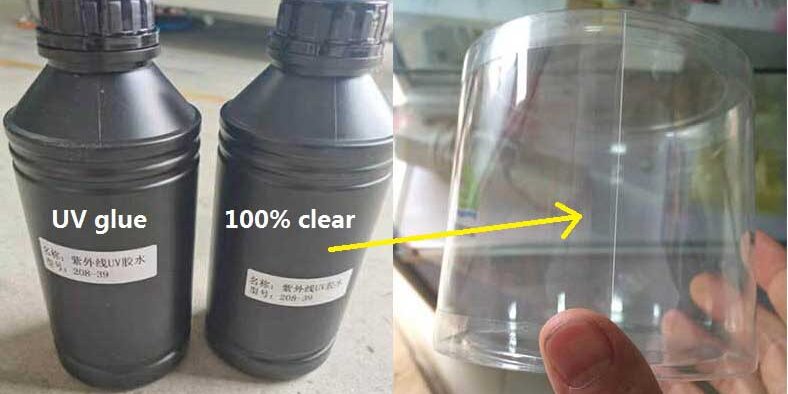
UV invisible adhesive is a liquid industrial chemical, classified as Class 8 chemical goods under international sea freight, air freight and courier standards.
Even though the product itself is non-corrosive, non-volatile and material-friendly, all liquid industrial adhesives for cross-border transportation must comply with unified regulations:
- Each shipment must be accompanied by a complete MSDS safety data sheet
- Authoritative test reports shall be provided as required
- Compliance review and filing are required for every single shipment
These are unified global logistics standards and cannot be exempted.
2. Shipping Differences Between UV Invisible Adhesive and PET / PVC Solvent Adhesive
This is the most critical and practical knowledge point for all production factories:
PET / PVC Solvent Adhesive
Contains highly active corrosive solvents with high shipping risks
Not accepted by ordinary international courier services
It can only be shipped via special chemical sea freight channels, featuring complicated procedures, numerous inspections and high costs, which is not suitable for small restocking orders.
UV Invisible Adhesive
Stable formula, non-corrosive and higher safety
Can be shipped normally through regular international courier channels
In short:
Among the three types of matching glue for cylinder machines, UV invisible adhesive is the only one available for convenient courier transportation.
3.Global Supply Status
UV invisible adhesive is not a scarce special material.
There are mature local manufacturers and supply channels in every country around the world.
Standard UV invisible adhesive compatible with PET cylinder machines can be purchased locally in most regions. The only difference is:
The local purchase price in most countries is generally higher than the ex-factory price in China.
4.Targeted Procurement Suggestions for Factories
1.Small & regular production factories: Prioritize local procurement
Suitable for manufacturers with stable daily consumption and small single purchase volume.
Advantages:
- No need to handle complicated chemical inspection and shipping procedures
- Fast delivery, zero transportation risks and no disruption to production schedule
- Avoid high international shipping costs
It is the most efficient and reliable choice for small and medium-sized production factories.
2.Large-scale mass-production factories: Recommended bulk centralized procurement
Suitable for large-scale manufacturers with stable output, large glue consumption and long-term continuous production.
Centralized bulk procurement can effectively share transportation and testing costs, resulting in lower overall material costs than sporadic local purchases, which can effectively save production costs in long-term operation.
Summary
- UV invisible adhesive is non-corrosive but belongs to Class 8 liquid chemicals, requiring full compliance documents for cross-border transportation.
- PET and PVC solvent adhesives face severe courier restrictions, while UV invisible adhesive enjoys more convenient transportation.
- UV glue can be purchased locally worldwide, yet local selling prices are generally higher.
- Local procurement works better for small-capacity factories, while bulk centralized procurement is more cost-effective for large-capacity factories.
Factories can flexibly select procurement methods according to their own production scale, avoiding shipping troubles while stabilizing product quality and controlling production costs.